Bua Gomutputra | September 2026 | Project 4
Are “Healthy” Breakfast Cereals Actually Healthy?
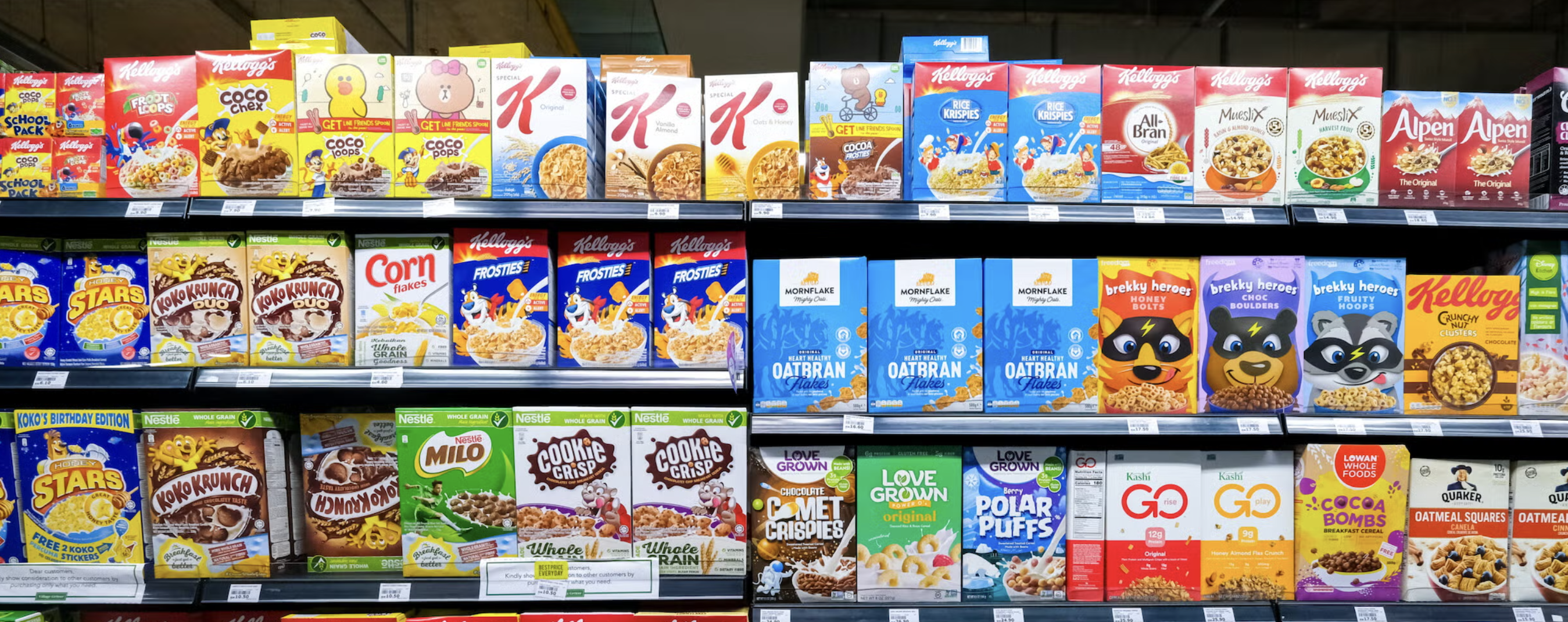
What is Breakfast Cereal?
“A type of food made from a cereal plant and commonly eaten at breakfast.” — Collins English Dictionary
How is it made?
- Processing: The grains are usually processed into fine flour and cooked.
- Mixing: The flour is then mixed with ingredients like sugar, cocoa, and water.
- Extrusion: Many breakfast cereals are produced via extrusion, a high-temperature process that uses a machine to shape the cereal.
- Drying: Next, the cereal is dried.
- Shaping: Finally, the cereal is shaped into forms, such as balls, stars, loops or rectangles.
Looking Beyond the Cereal Box
Breakfast cereals may look similar, but their nutritional profiles can be very different. Two cereals with the same calorie count may contain different amounts of sugar, fiber, protein and sodium. This website explores 32 selected cereals from a dataset of 77. The goal is to compare the numbers behind familiar products and examine whether calories and cereal names tell the whole story.
Why Should You Care?
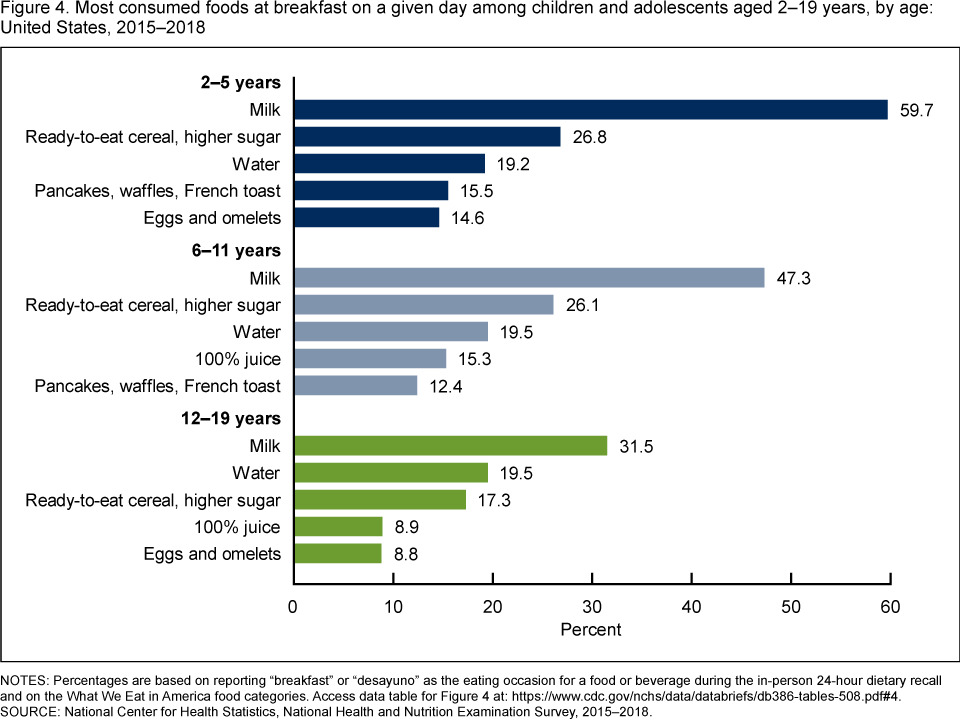
Breakfast cereal is a regular part of many diets. More than one-quarter of children and adolescents in America eat ready-to-eat cereal most days, while around half of adults eat it at least once or twice a week. Familiar products such as Cheerios, Frosted Flakes, Froot Loops and Lucky Charms remain household staples.
The graph from National Center for Health Statistics shows that milk alongside ready-to-eat cereal consistently ranks the highest amongst 2 to 19 year olds.
Cereals are often promoted as “heart healthy,” “high in vitamins” or “made with whole grains,” creating the impression that they are nutritious. However, Harvard Health Publishing explains that these claims may not reflect a cereal’s complete nutritional profile. A fortified cereal, for example, may still contain high levels of sugar or sodium.
This page helps consumers look beyond packaging by comparing the calories, sugar, fiber, protein and sodium in 77 cereals. Users can examine nutritional tradeoffs, compare familiar products and make more informed breakfast choices.
Main Findings
Same Calories, Different Nutrition
In the dataset, Cheerios and Apple Cinnamon Cheerios both have 110 calories per serving. However, regular Cheerios contains one gram of sugar, while Apple Cinnamon Cheerios contains 10 grams.
A Name Does Not Tell the Whole Story
Post Nat. Raisin Bran contains more fiber than Froot Loops, but it also contains more sugar per listed serving. These differences show why it helps to compare individual nutrients.
Look at More Than One Number
Calories, sugar, fiber, protein and sodium each describe a different part of a cereal's nutritional profile. The comparisons on this site use the dataset's listed servings, which may differ in size.
Click here to explore the cereal table and full comparisons!
Click here to view the research sources and glossary!