Bua Gomutputra | September 2026 | Project 1
EMPLOYEE SATISFACTION AT IKEA
Does IKEA’s relatively strong employee-engagement score tell the full story of its employee experience?
Purpose of this Page
This page helps job seekers, employers and researchers explore IKEA employees' experiences. It helps to determine whether it reflects the company’s values of togetherness, equality, and care. By combining IKEA’s official workforce data with employee ratings and written reviews, users can identify patterns in engagement, workplace culture, management, compensation, and career development. The goal is to turn information from multiple sources into meaningful insights about what it is actually like to work at IKEA.
What Data is Currently Out There?

- Employee engagement survey responses
- Overall job-satisfaction ratings
- Whether employees feel that IKEA lives its values
- Employee role, location, employment status, and length of employment
- Written employee reviews describing positive and negative experiences
- Voluntary employee-turnover rates
- Wages and employee benefits
- Gender representation and equality
- Training and professional development
- Workplace health and safety
How is the data formatted?
A major limitation is that IKEA publishes aggregated results rather than individual survey responses. Public employee-review platforms provide more detailed experiences, but reviewers are self-selected and may not represent IKEA’s entire workforce. For example:
- Employee response: “My manager listens to me, and I feel supported at work.”
- Data: Agreement rating = 4 out of 5
- Information: Positive management response
- Action: Compare results across employee groups and investigate whether management, scheduling, compensation, or workload contributes to lower scores.
Web Resources:
1. IKEA Employee Key Performance Indicator Dashboard
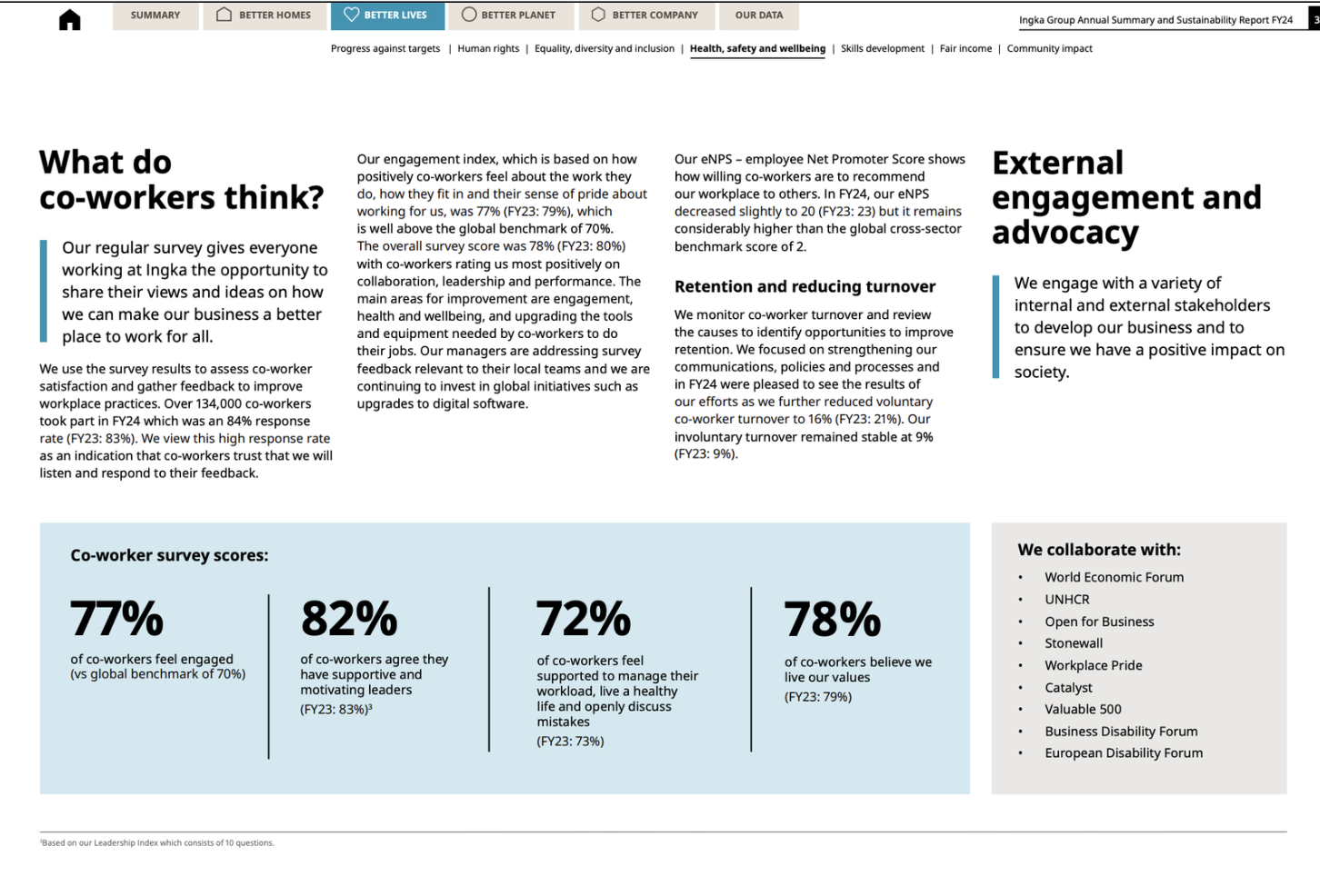
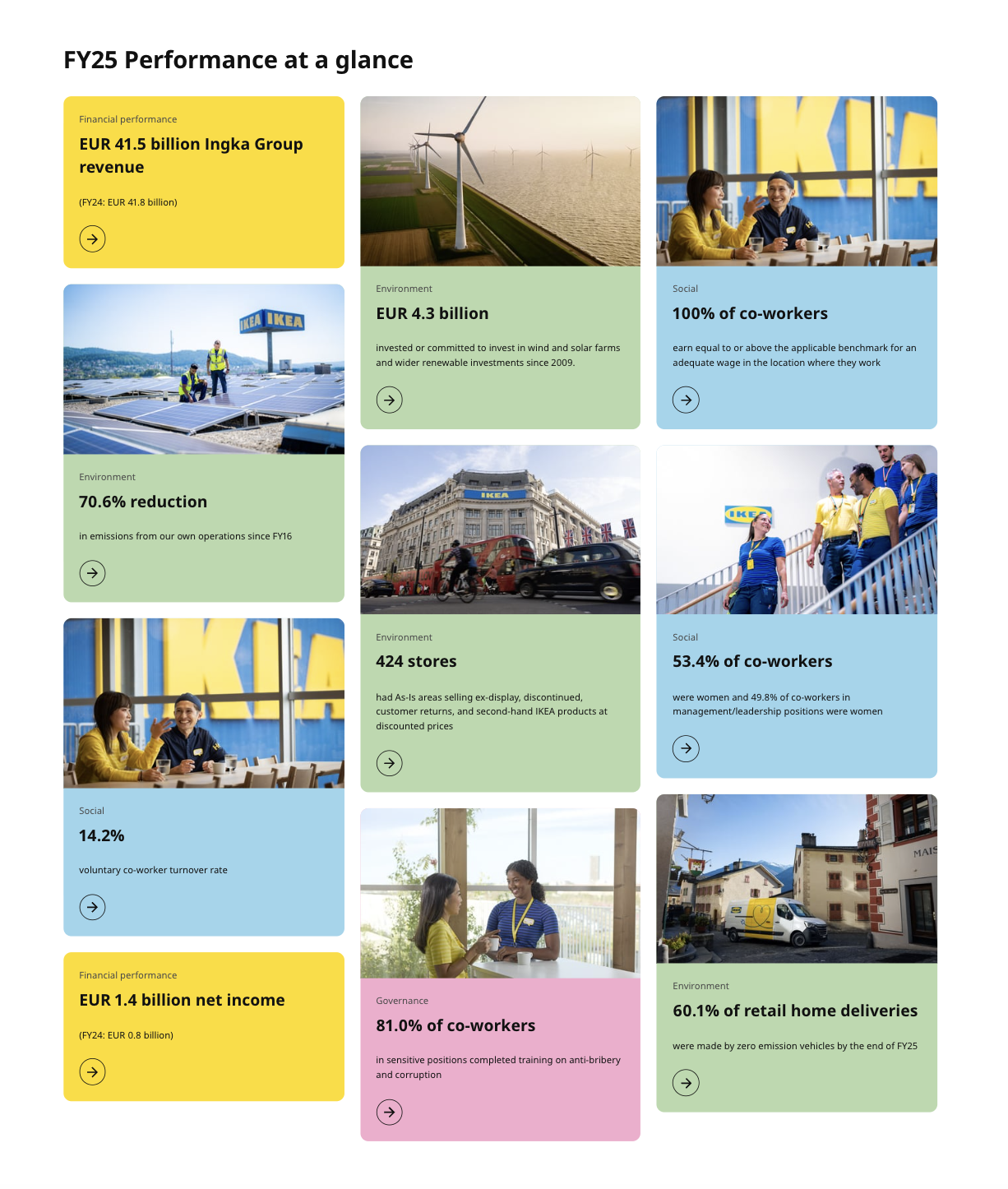
IKEA’s annual report presents key employee measures as large numerical cards, including: Employee engagement, Voluntary turnover, Gender representation, Wage standards, Training and development.
You can find this information and reports for previous years readily accessible on their website.
Pros: Major results easy to understand quickly.
Cons: Does not show the distribution behind each number.
More specifically, a 77% engagement index does not reveal whether or not satisfaction is consistent across employees or whether certain stores and roles have substantially lower scores.
2. Employee Rating Breakdown

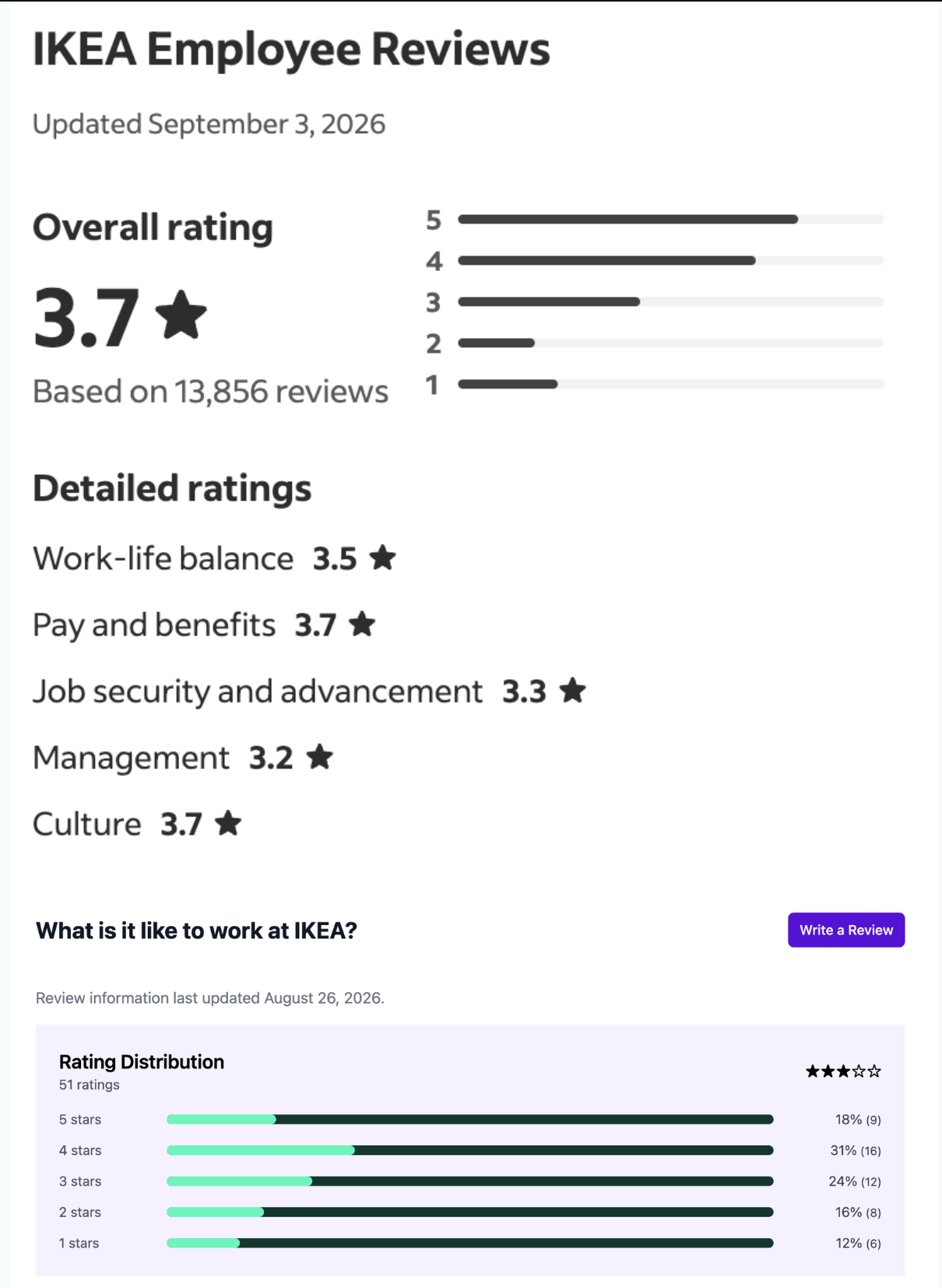
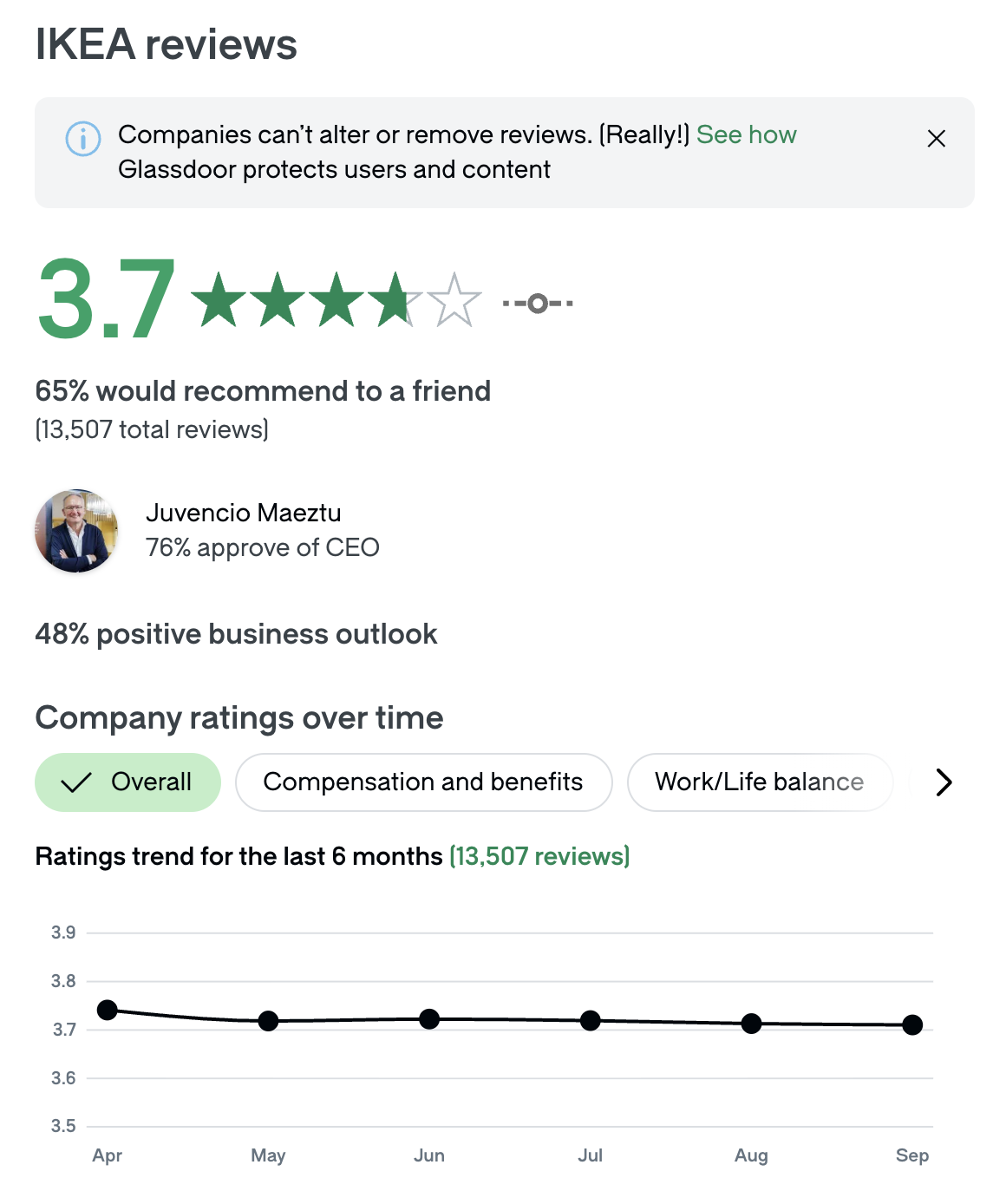
Indeed presents IKEA’s overall employee rating, rating distribution, and detailed scores for work-life balance, pay and benefits, advancement, management, and culture.
While employees rate IKEA relatively positively overall, lower scores for management and career advancement suggest that they may value the workplace culture while feeling less satisfied with leadership and opportunities for long-term growth.
Pros: Breaks satisfaction into categories, making strengths and weaknesses easy to compare. It also uses thousands of reviews, providing a broad range of employee perspectives.
Cons: Self-selected reviews may not represent IKEA’s entire workforce.
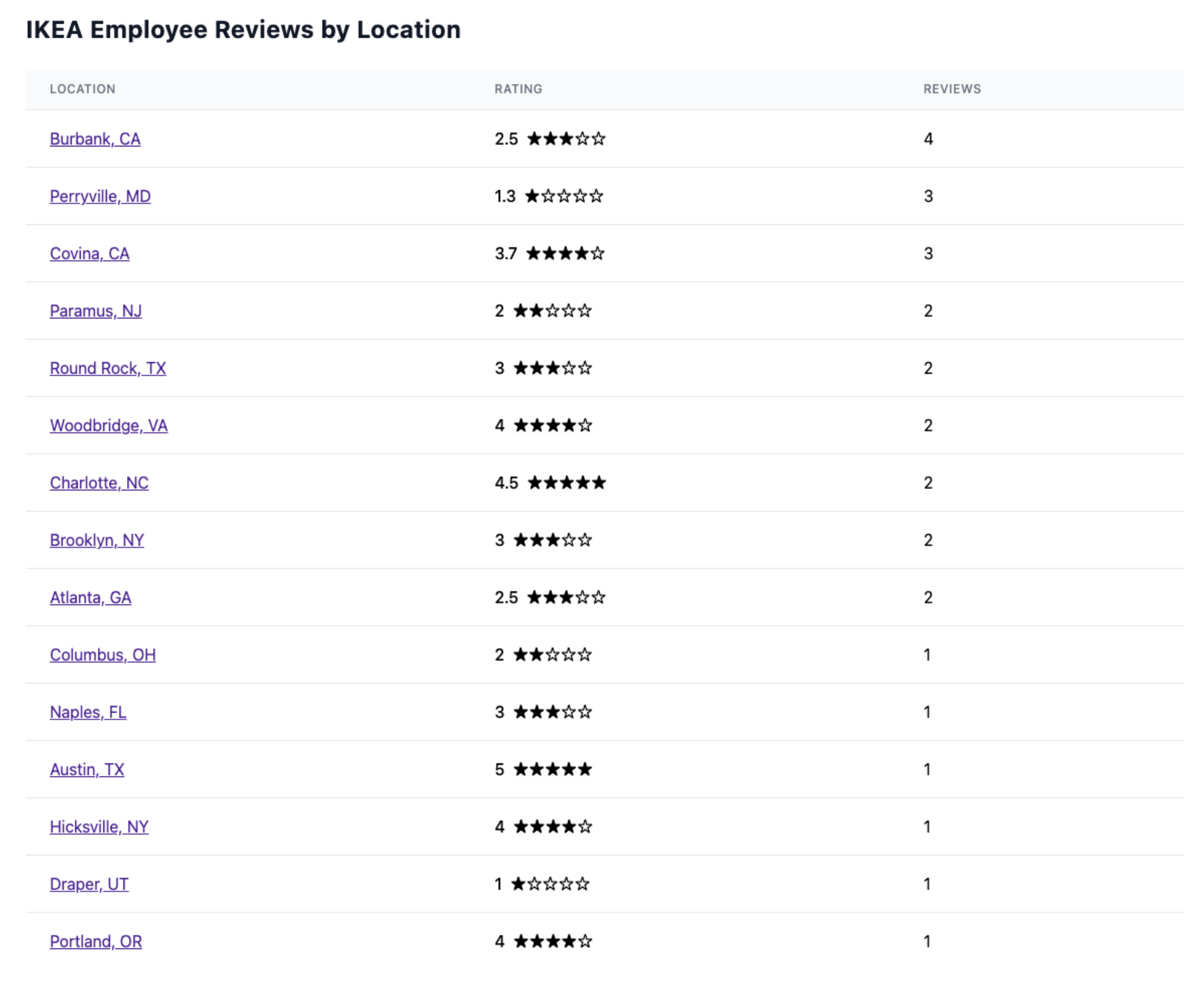
Combined ratings can hide differences between job roles, stores, and locations.
3. Academic Intervention Study

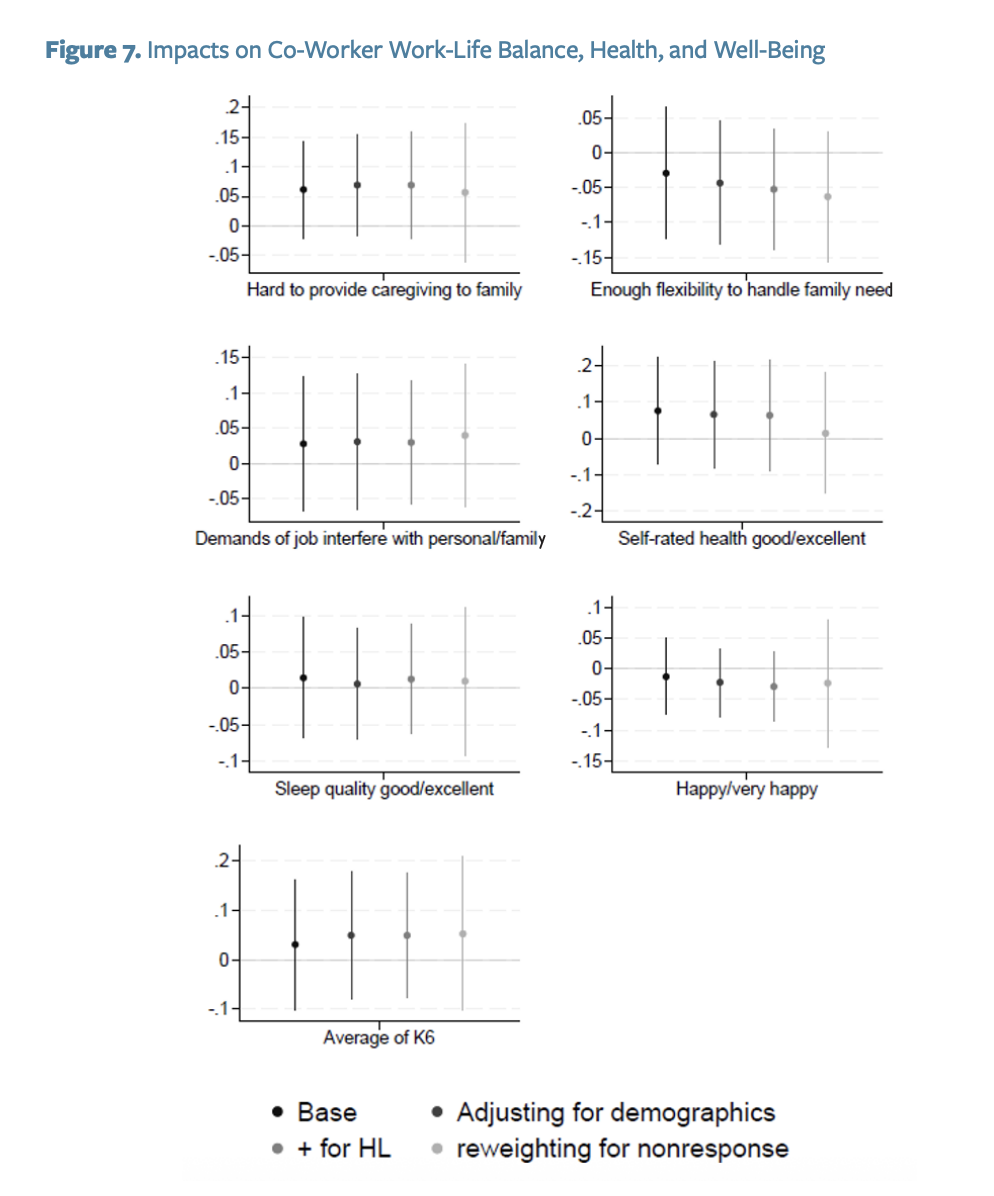
The Harvard Shift Project evaluates whether IKEA’s self-scheduling intervention improved employees’ work-life balance, health, sleep, happiness, and psychological distress. Although some estimates appear positive or negative, every confidence interval crosses zero, meaning the study found no statistically significant improvements.
This suggests the scheduling tools did not meaningfully improve employee well-being, possibly because awareness, training, and use of the new features were limited.
Pros: Uses a structured intervention and comparison groups, offering stronger evidence than anonymous online ratings.
It also examines specific dimensions of employee well-being while accounting for demographics, working hours, and survey nonresponse.
Cons: Self-selected reviews may not represent IKEA’s entire workforce; some combined ratings can hide differences between job roles, stores, and locations.
Additional Examples:
- Interactive Annual Summary Report Website
- Rating & Line Graph of Previous 6 Months
- Employee Feedback (Table & Rating)
So, What Can We Learn From This Data?
Is Ikea a Positive Place to Work?
Job seekers can evaluate whether IKEA’s public values are reflected in employees’ actual experiences. Instead of relying on one overall score, they can consider engagement, management, compensation, scheduling, career advancement, and well-being together.
Which Areas need Improvement
Users can compare IKEA’s stronger measures, such as culture and overall engagement, with weaker areas such as management and advancement. This helps reveal specific concerns that may be hidden by a relatively positive company-wide average.
Do Workplace Initiatives Actually Help Employees?
Researchers and IKEA managers can examine whether initiatives intended to improve working conditions produce measurable results. For example, they can investigate whether greater scheduling flexibility improves work-life balance, health, or happiness, and whether limited training or participation prevents an initiative from succeeding.
Do Different Sources Tell the Same Story?
Users can compare IKEA’s official reporting with anonymous employee reviews and independent academic research. Agreement among the sources makes a conclusion more convincing, while differences can reveal gaps between company-wide reporting, individual experiences, and measured outcomes.
Sample Analysis: Does High Engagement Equal a Good Employee Experience?
Research Question - IKEA reports relatively strong employee engagement, but does this mean employees are satisfied with every part of their workplace experience?
Evidence
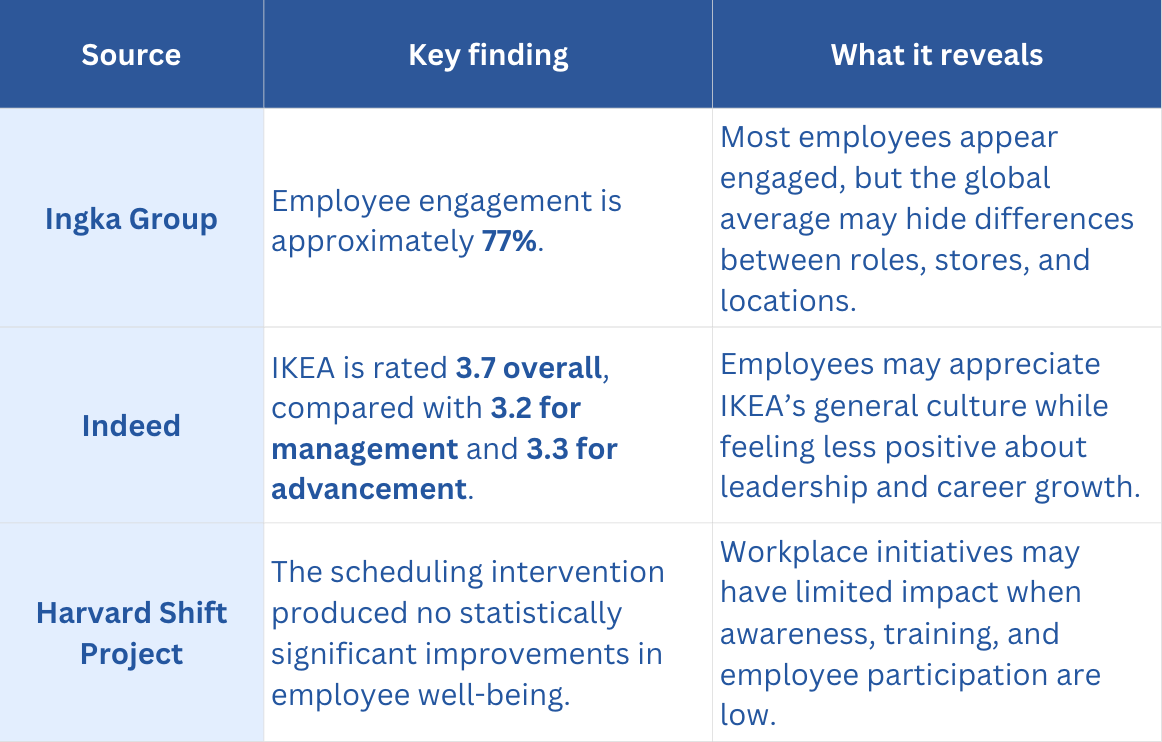
Table created with data from sources above.
Interpretation
The evidence presents a more complicated picture than IKEA’s overall engagement score alone. Employees may feel connected to IKEA and its values while remaining dissatisfied with specific parts of their employment. The Harvard study further demonstrates that introducing a workplace solution does not automatically improve employee outcomes.
Conclusion
IKEA appears to have a relatively engaged workforce, but engagement should not be treated as a complete measure of workplace quality. Management, advancement, scheduling, and the implementation of employee-support initiatives should also be examined when evaluating the employee experience.
More Than an Engagement Score...
The evidence suggests that IKEA’s engagement score does not tell the full story. Although Ingka Group reports that approximately 77% of employees are engaged, Indeed’s lower ratings for management and career advancement reveal dissatisfaction with specific aspects of employment. The Harvard Shift Project also found that IKEA’s scheduling intervention did not produce statistically significant improvements in work-life balance, health, or well-being among the employees studied. Together, these findings show that employees can feel connected to IKEA while still experiencing concerns about leadership, growth, and scheduling. IKEA therefore appears to have a relatively engaged workforce, but its employee experience is more mixed when examined across multiple measures and sources.